Heat-resistant silicone is primarily chosen for a joint that is meant to remain flexible and falls within the working conditions specified for the product. The mere presence of an oven or stove does not determine its suitability. The temperature at the casing can be completely different from that in the burner, and a construction gap requires a different material than a sealing joint.
First, determine what the joint is supposed to do
Vitcas Heat Resistant Silicone is a black silicone with a declared resistance up to 315°C. Before use, check the temperature at the joint, the type of both surfaces, and the expected movement of the connection. If you do not have reliable data on heating in this area, merely touching the cold housing does not confirm anything.
In the kitchen, it is additionally necessary to determine whether the joint can come into contact with food. The manufacturer states that this silicone has not been tested for food contact. Therefore, do not select it for such use solely based on the high temperature indicated on the packaging.
What to check with the oven?
Distinguish the cooler external part from the interior of the device, the flue pipe, and the door gasket. Each of these areas has its own requirements. Silicone is not a universal method for sealing the firebox nor a substitute for the parts specified by the oven manufacturer.
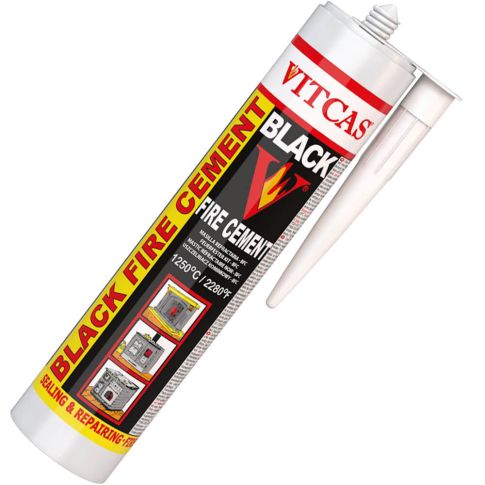
When conditions require a stiff putty for minor repairs, BLACK Fire Cement can be considered within its range of applications. However, a higher declared cement temperature does not make it suitable for a movable joint. In such a case, a solution compatible with the joint construction must be found, rather than simply buying a product with a higher number on the label.
Preparation and startup
Clean and dry the substrate and remove any remnants of old sealant. Before applying, determine the geometry of the joint and the method of protecting adjacent surfaces. Curing of silicone takes time; a thicker layer does not become ready for use just because its surface is dry.
Return to use after meeting the product and equipment requirements. If the joint detaches or opens again, check the substrate, temperature, and movement of elements before reapplying.