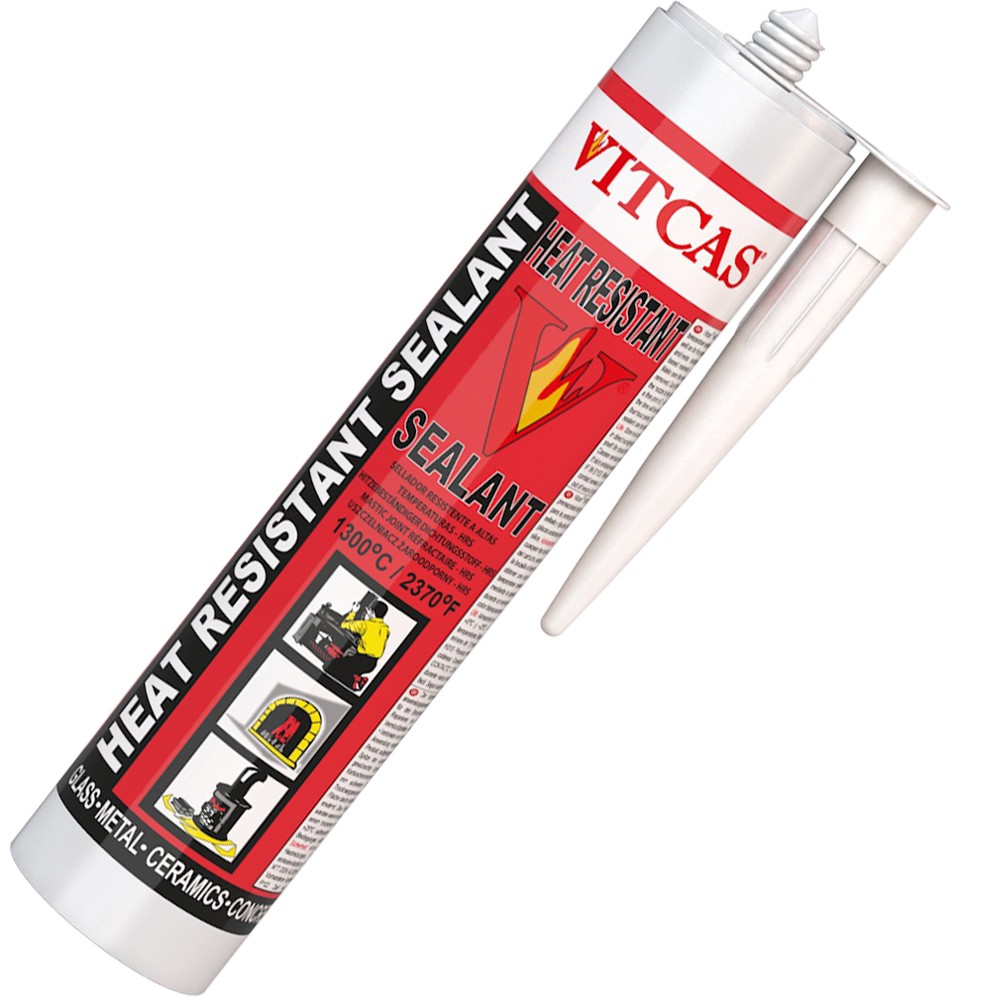
A connection operating at high temperature requires a properly intended material, but the repair is prepared cold. Before application, determine whether the location has a fixed geometry or requires movement. The name “sealant” does not mean the same behaviour for every compound in a cartridge.
Read the HRS range
Heat Resistant Sealant 1300 is Vitcas paste for the described high-temperature-resistant indoor joints. Documentation indicates compatible substrates and a 2–3 mm layer. Also check surface preparation and the requirements of the specific device.
Record the width, depth, and condition of both sides. If components change position, determine the cause and the planned detail. The paste's resistance does not confirm its use as an arbitrary joint compensating for the movement of the entire structure.
Compare other product tasks
Heat Resistant Silicone has separate flexible applications and its own operating conditions. Do not assign the HRS paste the same function based on similar packaging. Check the documentation of the selected material along with the geometry of the location.
Board Adhesive BA is an adhesive for specific board joints connections. With a construction gap, separate bonding, finishing, and elements left for movement. Not every visible spot needs arbitrary filling with new material.
Prepare the surface and further inspection
Remove loose residues and contamination using a method compatible with the substrate and product instructions. Maintain the required bonding and preparation to the temperature before normal use. Adjust the scope of work to actual accessibility, without improvising on heated parts.
Photograph the connection before covering and record the variant used. After the planned startup, compare the area once cooled. Any recurring mark should direct attention to the assessment of the substrate and movement of components, rather than solely to purchasing a material with a higher temperature in the name.