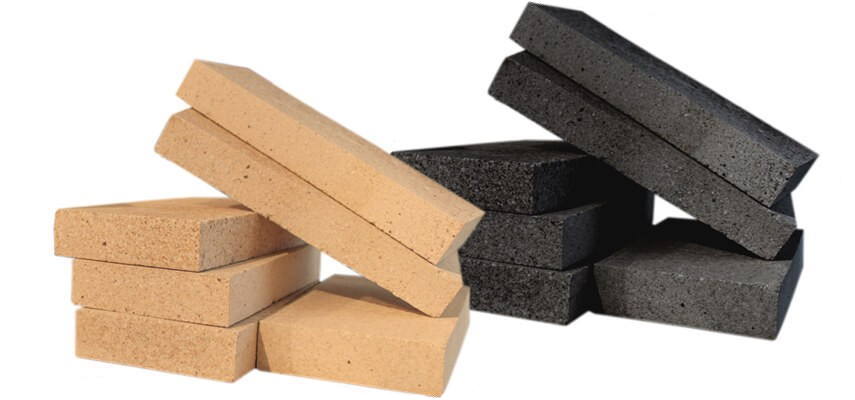
In a brick barbecue, not every brick performs the same task. The firebox handles contact with fuel and tools, the supports carry the weight, and the outer layer closes the structure. Identifying these parts helps to select the material without building the entire barbecue from a product chosen solely based on temperature.
Mark the flame and ember zone
In the cross-section, show the bottom, sides, and back wall of the firebox. Add the method of adding fuel, removing ash, and supporting the grate. Areas struck by tools require an assessment of mechanical resistance, not just thermal.
Consider Vitcas dense firebricks for a compatible working layer. Dimensions should match the planned layout of joints and openings. A very narrow cut at a support may change the way the load is transferred, so check the detail before cutting.
Lightweight brick serves a different function
Insulating bricks Grade 23 have a porous structure and limit heat flow in appropriate applications. Do not treat them as an automatic replacement for a wear-resistant base. Check the pressure, abrasion, and whether the lightweight material will be exposed.
Similarly, an external decorative wall does not independently confirm proper insulation. Record the function of each layer. If the goal is to limit heating of the adjacent surface, an assessment of the complete cross-section and local operating conditions is required.
Match joints to the finished layout
Outdoor Oven Cement is used for appropriate external refractory joints. The thickness and preparation of the joints result from the design and the material instructions. Do not rigidly fill the space intended for movement of metal equipment.
Fit the grate together with the bricks before closing the last layer. Check the possibility of removing it and access for cleaning. A photo of the arrangement with labelled parts will be useful for later replacement, when it is necessary to preserve the original function of a specific element.