At the fireplace wall, it is necessary to distinguish between restoring a larger area and repairing a small defect. Selection starts from the layer that remains under the new material. The high temperature in the product name does not replace the assessment of the substrate and the cause of the damage.
Check the surface cold
Mark loose fragments, traces of moisture, and crack direction. Assess whether the change concerns only the smooth finish or also the layer beneath it. The new thin material should not rest on a coating detaching from the wall.
Fireplace Render is described for specific layers on the wall. Its preparation and readiness must be considered before the finishing plaster. Do not replace the thicker base layer with an arbitrarily increased thickness of the finishing coat.
Select the scope of repair
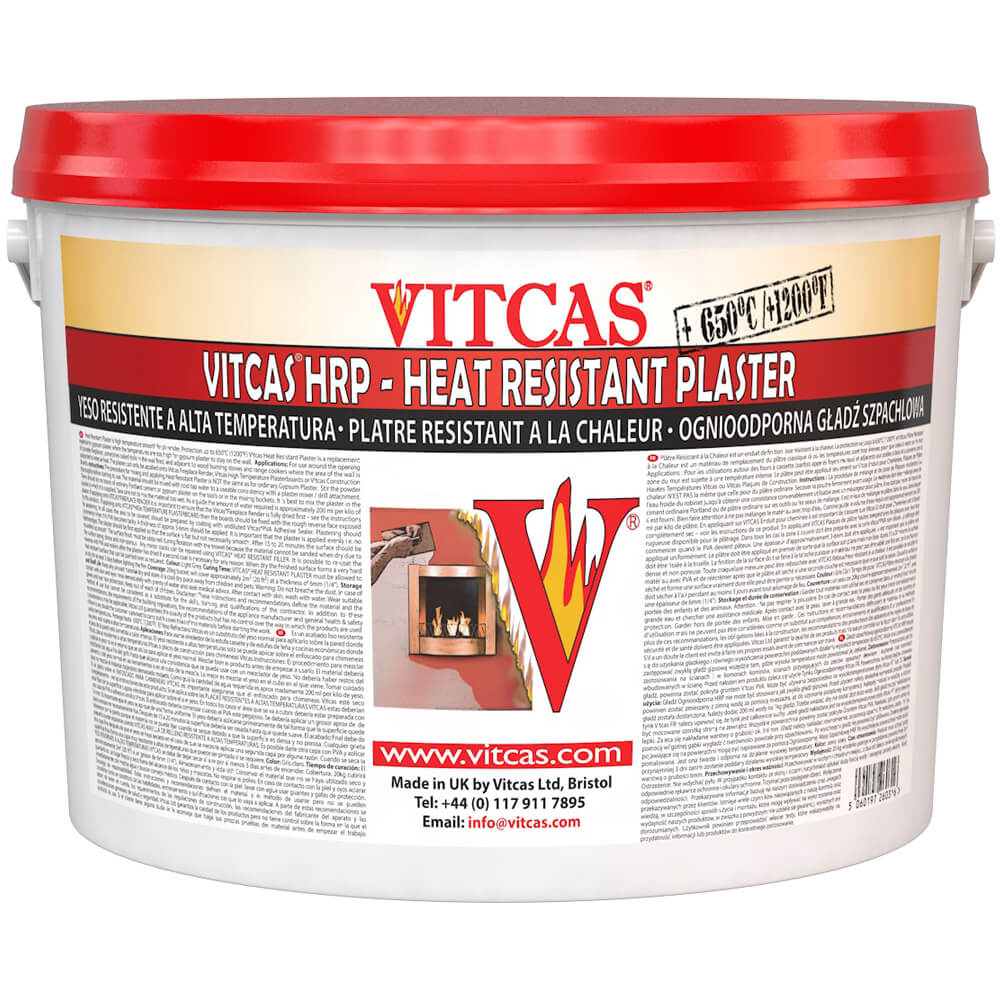
Heat Resistant Plaster provides a smooth finish on the described substrates. The instructions require a layer of 3–6 mm and proper surface preparation. Restoring a larger area requires maintaining these conditions across the entire repaired section.
Heat Resistant Filler is used for specific minor defects and joints. The HR data sheet also indicates it for suitable small touch-ups. However, the filler does not stop arbitrary substrate movement or repair every cracked installation.
Prepare the finish before the season
Keep the instructions for priming and mixing the products. HR smoothness is achieved while trowelling the fresh layer, without the usual sanding of the dry surface. Before decorating and using the fireplace, take into account the required drying and preparation.
Record the layers and work dates. After the required start-up, compare the cold state with an earlier photo. If the crack reappears at the same spot, return to the substrate assessment; simply choosing another surface compound does not explain the cause of the change.