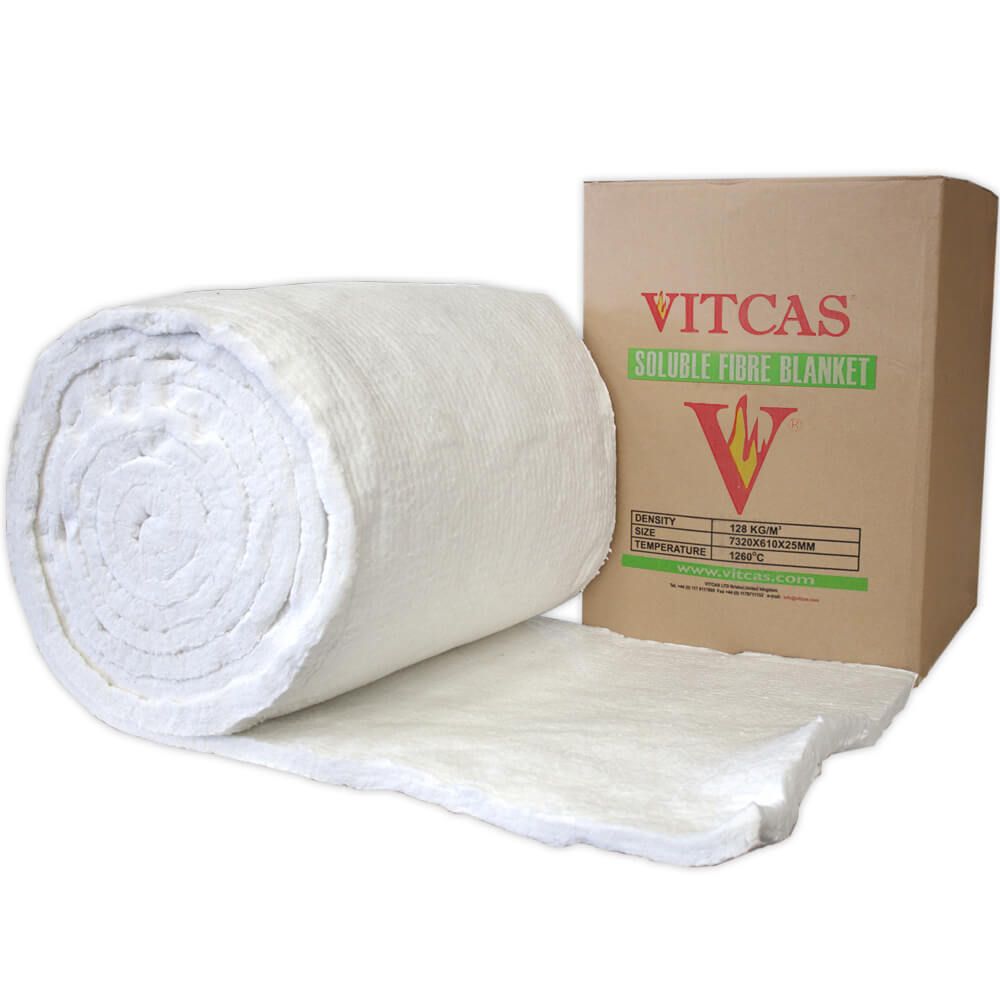
Ceramic fibre blanket limits heat flow without building a heavy layer of dense bricks. However, it does not constitute an standalone oven chamber or enclosure. In a light construction, first determine what holds the insulation and how it will be protected during use and possible movement.
Draw the position of the insulation
ceramic fibre blanket Vitcas has a flexible format, useful in appropriate high-temperature systems. Mark its path around the chamber, strip joints, and terminations at the entrance. Do not skip a difficult corner just because the entire large surface is covered.
Rigid ceramic fibre board serves a different function than a flexible blanket. If the design requires supported insulation under the chamber, check the format and conditions of the entire system. A soft layer does not arbitrarily replace a weight-bearing substrate.
Choose retention for the expected loads
Ceramic Fibre Adhesive is used for specific connections of insulation with the appropriate substrate. However, bonding alone does not establish the resistance of the complete structure to transport. Check the planned support and any mechanical retention of the material.
The mounting should maintain the thickness specified in the cross-section. Accidental compression or stretching alters the construction of the layer. Separately assess the housing connections and the components that may stress the insulation during movement.
Leave the fibres in the specified enclosure
The insulation should not create randomly exposed surfaces in the food chamber or along the path of tool operation. When cutting and fitting, follow the variant's safety data sheet. Record the method of edge protection before covering the material.
Before moving, follow the equipment requirements, taking into account cooling and the condition of the setup. After positioning, inspect the connections again. The low weight of the insulation roll does not confirm that the finished oven can be moved in any manner.