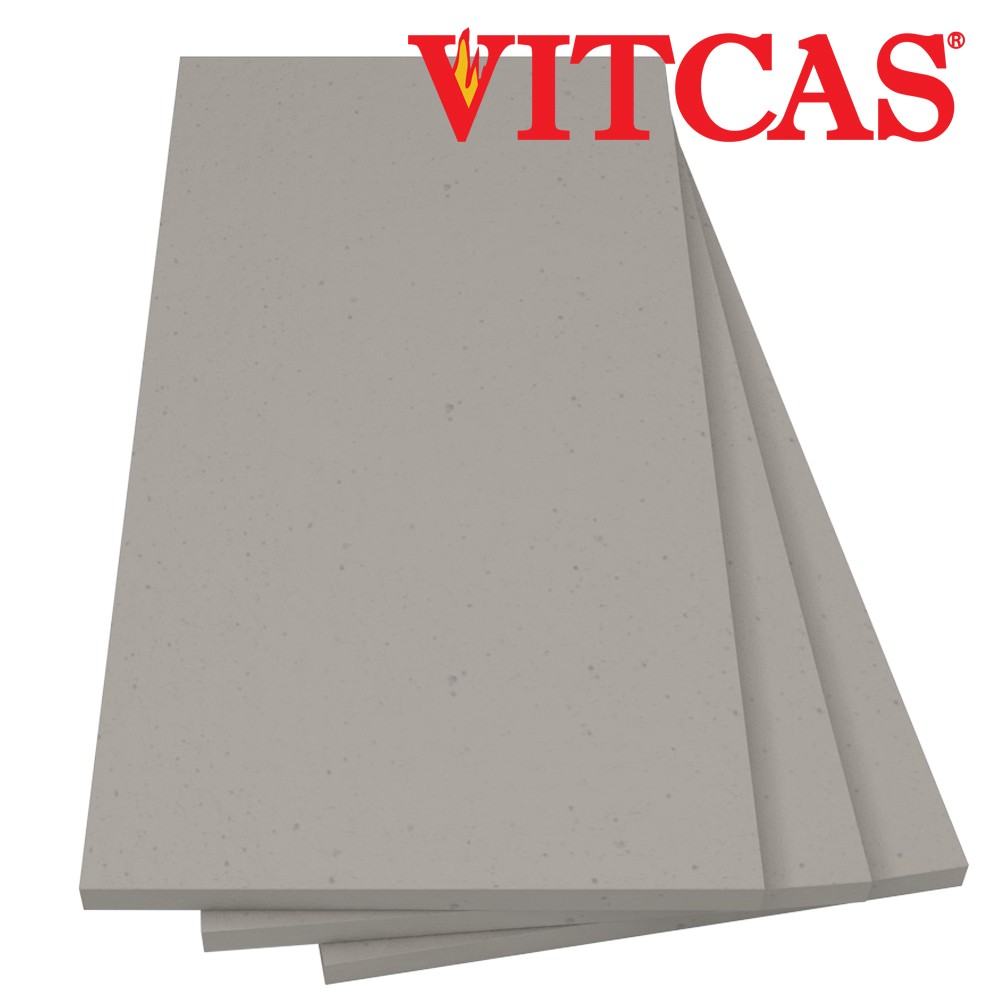
The accumulation board is meant to store heat in a specific system, while light insulation limits its flow. These tasks are not interchangeable. In a cool living room, the selection of additional material should follow the heating system design, not just the expectation that a thicker layer will heat the room more evenly.
Assign material to the location
ACC Heat Accumulation Board is a dense Vitcas heat-storage board. Compare its application with the device documentation and the planned cross-section. It is worth determining how heat reaches the layer and how it should later be released.
Ceramic Fibre Board is a different insulating material. A similar sheet format does not mean the same performance. The replacement should consider the layer's function, weight, and substrate requirements, rather than relying solely on dimensions.
Consider weight and fastening
Mark supports, connections, and the load transfer path throughout the structure. Check whether the documentation provides for the selected arrangement. Adhesive, shelf, and substrate must correspond to the actual material and the way the device operates.
Heat Accumulation Ring is another accumulation element from the store. The ring is not a substitute for any board nor an addition to every flue. Choose the format according to the entire solution, keeping space needed for installation and later inspection.
Compare expectations with the entire heating system
The way heat is released also depends on the device, burning, room, and building conditions. Without data for such a system, do not determine percentage savings or a fixed duration of heat release after extinguishing. The material has its own function, but it does not describe the entire heating outcome.
Keep the drawing and data of the specific board. Before covering, photograph the support and connections. When changing the insert later, it will be possible to reassess the compatibility of the heat-storage assembly instead of assuming it from the similar shape of a new device.